Navigating Tiered Loyalty Matrices That Optimize Payout Preferences in Interactive Casino Portals
David Carter · Sep 21, 2026

Navigating Tiered Loyalty Matrices That Optimize Payout Preferences in Interactive Casino Portals
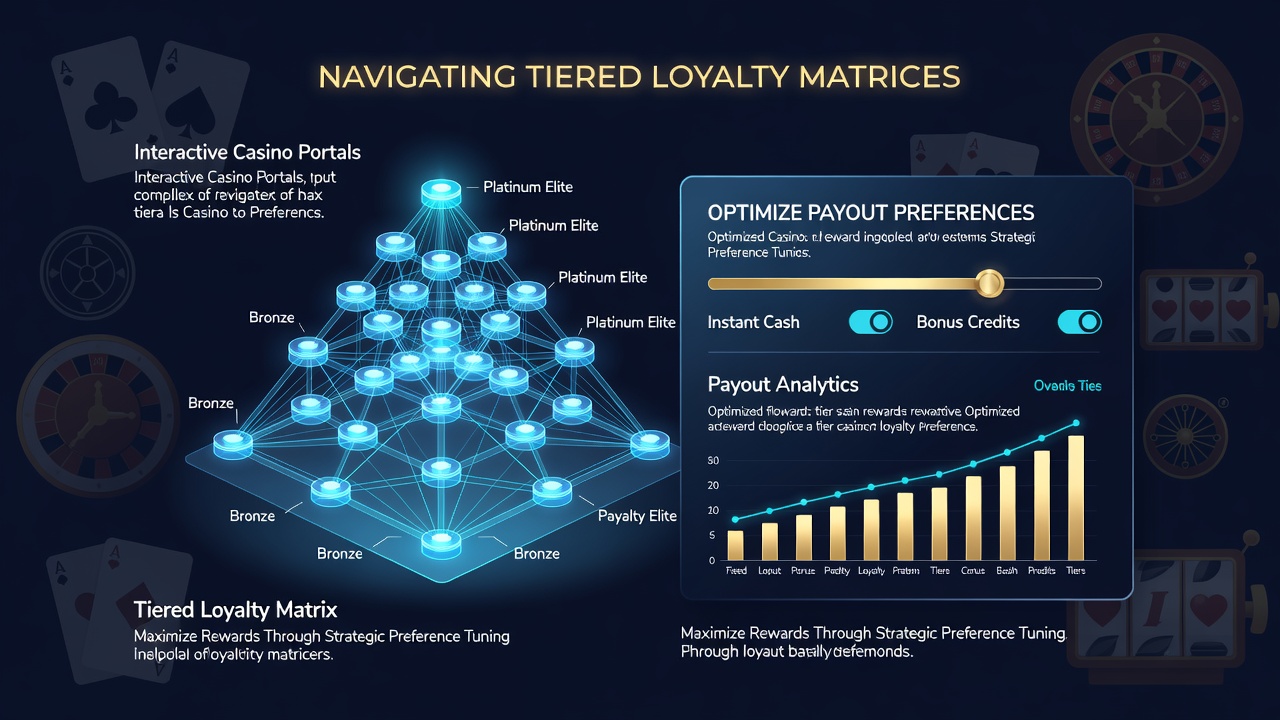
Interactive casino portals organize player rewards through tiered loyalty matrices that connect point accumulation directly to payout options and withdrawal preferences. These systems assign players to levels such as entry, mid-tier, and elite based on activity metrics including deposit volume, game participation, and retention periods. Each tier unlocks specific adjustments to payout speed, transaction limits, and reward conversion rates that align with individual cash-out priorities.
Structure of Loyalty Matrices in Digital Casino Environments
Operators build these matrices around cumulative data points that track player behavior across sessions, and the resulting tiers determine access to customized payout pathways. Entry-level participants receive standard processing times for withdrawals while higher tiers introduce reduced fees, priority queues, and expanded choices for currency conversion. Data from industry monitoring indicates that portals adjust these parameters quarterly to match regulatory updates and player engagement patterns observed through September 2026.
Points accrual follows formulas that weigh different activities differently, with table games and slots contributing at distinct rates depending on the portal's internal weighting. Players advance when they reach thresholds that combine total wagers with frequency of deposits, which in turn activates new payout preferences such as instant bank transfers or higher daily caps. Those who monitor their progress through account dashboards can shift activity focus to accelerate movement between tiers without altering overall spending habits.
Optimizing Payout Preferences Through Tier Progression
Portal interfaces present payout preference selectors that expand as players reach new matrix levels, allowing selection among methods like e-wallets, bank wires, and cryptocurrency options with varying fee structures. Mid-tier status often removes minimum withdrawal thresholds that apply to entry participants, while elite tiers add features such as same-day processing guarantees and personalized account managers who handle large transactions. Reports compiled by the American Gaming Association show that portals using these tiered systems recorded measurable increases in completed withdrawals during 2025 and early 2026 periods.
Case examples from multiple operators demonstrate how players who concentrate wagers on high-point-earning games move upward faster and gain earlier access to preferred payout channels. One documented pattern involves participants who combine regular deposits with bonus participation to meet advancement criteria within shorter timeframes. The resulting tier benefits then apply retroactively to pending transactions in many systems, which streamlines the overall cash-out sequence.
Regulatory Influences on Loyalty and Payout Systems
Gaming authorities in regions including Australia and Canada require operators to maintain transparent records of how loyalty tiers affect payout terms, and these rules shape the design of matrix algorithms. Compliance documentation must detail the exact criteria for tier advancement along with corresponding changes to withdrawal limits and processing timelines. The Australian Gambling Research Centre published findings in 2025 that examined how such transparency measures influence player decision-making around reward redemption.
Portals incorporate geolocation filters and identity verification steps that interact with loyalty matrices to ensure payout preferences remain compliant across jurisdictions. Updates implemented by September 2026 included enhanced audit trails for tier-related adjustments, which allow regulators to verify that payout optimizations do not conflict with responsible gaming protocols. Industry groups such as the European Gaming and Betting Association have tracked these developments through member surveys that aggregate operational data from participating portals.
Player Navigation Strategies and System Features
Account tools within portals display projected tier advancement timelines based on recent activity, which helps participants plan moves that align with desired payout adjustments. Users who review historical point ledgers can identify which game categories deliver the highest return toward status elevation, thereby targeting progression more efficiently. Several platforms now include simulation features that model how different activity mixes would affect future payout options before players commit to specific patterns.
Observers note that integration of loyalty data with real-time payout selectors reduces friction during withdrawal requests, particularly when players have already reached tiers that pre-approve certain transaction types. Research conducted by academic groups at institutions focused on digital commerce has analyzed user interaction logs to quantify time savings associated with tier-optimized pathways in casino portals.
Conclusion
Tiered loyalty matrices continue to evolve as portals refine the connections between player status, point systems, and payout customization features. Available data through September 2026 shows consistent implementation across major operators, with regulatory oversight ensuring clarity in how advancement translates to concrete withdrawal benefits. Players who track matrix requirements and utilize available dashboard tools maintain greater control over their preferred payout sequences within these structured environments.